

Beta-Alanin ist eines der am intensivsten erforschten Leistungspräparate auf dem Markt Toda y – und eines der wenigen, dessen Wirkmechanismus eindeutig nachgewiesen, und gut verstanden ist. Es wirkt nicht, indem es das zentrale Nervensystem wie Koffein anregt oder die Muskeln direkt mit Energie versorgt wie Kreatin, sondern indem es die Konzentration eines bestimmten intramuskulären Puffers namens Carnosin erhöht. Das Ergebnis ist eine messbare Verzögerung des Einsetzens der Muskelermüdung bei hochintensivem Training – ein Vorteil, der sich bei wochenlangem, konsequenten Gebrauch verstärkt. Dieser Leitfaden erklärt genau, wie es wirkt, wer am meisten davon profitiert, und wie man es effektiv einsetzt.
Was ist Beta-Alanin?
Beta-Alanin (β-Alanin) ist eine natürlich vorkommende, nicht-proteinogene Aminosäure – das bedeutet, dass es im Gegensatz zu den meisten Aminosäuren, nicht in Proteine eingebaut wird. Stattdessen fungiert es als geschwindigkeitsbestimmender Vorläufer von Carnosin, einem Dipeptid, das in hohen Konzentrationen im Skelettmuskel vorkommt, insbesondere in schnell zuckenden Typ-II-Fasern. Die Fähigkeit des Körpers, den Carnosingehalt in den Muskeln zu erhöhen, wird in erster Linie durch die Verfügbarkeit von Beta-Alanin, begrenzt, weshalb eine direkte Supplementierung die wirksamste Strategie zur Erhöhung des Carnosinspiegels darstellt.
Beta-Alanin kommt natürlicherweise in Nahrungsproteinen vor – insbesondere in Fleisch, Fisch, und Geflügel – als Bestandteil von Carnosin und Anserin (, einem verwandten Dipeptid). Aus diesem Grund weisen Allesesser in der Regel etwas höhere Carnosin-Ausgangswerte in den Muskeln auf als Vegetarier und Veganer, und reagieren Personen, die sich überwiegend pflanzlich ernähren, möglicherweise am stärksten auf eine Beta-Alanin-Supplementierung.
Der Carnosin-Puffer: Warum er für die Leistungsfähigkeit wichtig ist
Um zu verstehen, warum Beta-Alanin wirkt, muss man wissen, was während hochintensiver körperlicher Betätigung im arbeitenden Muskel geschieht. Wenn die Trainingsintensität zunimmt und der Bedarf an ATP (Zellenergie) das übersteigt, was das aerobe System liefern kann, greift der Körper zunehmend auf die Glykolyse zurück – den schnellen Abbau von Glukose zur Energiegewinnung. Ein wichtiges Nebenprodukt dieses Prozesses ist die Anreicherung von Wasserstoffionen (H⁺), die den pH-Wert in den Muskelzellen senken. Diese Azidose hemmt die an der Energieproduktion und Muskelkontraktion beteiligten Enzyme, und ist ein Hauptfaktor für das Brennen, die Ermüdung, und den letztendlichen Kraftverlust, der die Leistung bei hochintensiven Anstrengungen einschränkt.
Carnosin wirkt als intrazellulärer pH-Puffer – es nimmt Wasserstoffionen, auf und neutralisiert sie, wodurch es dem Absinken des pH-Werts entgegenwirkt und somit die Zeit verlängert, in der die Muskeln eine hohe Leistungsintensität aufrechterhalten können, bevor Ermüdung einsetzt. Muskeln mit einem höheren Carnosingehalt vertragen mehr Azidose, bevor die Leistungsfähigkeit nachlässt. Da die Einnahme von Beta-Alanin die wirksamste Methode zur Steigerung des Carnosingehalts in den Muskeln ist, ergibt sich folgender direkter Zusammenhang zwischen Nahrungsergänzung und Leistungsergebnis: mehr Beta-Alanin → mehr Carnosin in den Muskeln → bessere Säurepufferung → verzögerte Ermüdung.
Was die Forschung zeigt
Beta-Alanin war Gegenstand zahlreicher randomisierter kontrollierter Studien, und die gesamtbeweislage ist solide und konsistent. Die International Society of Sports Nutrition (ISSN) hat eine Stellungnahme veröffentlicht, in der Beta-Alanin als wirksames ergogenes Hilfsmittel befürwortet wird, und dabei Folgendes feststellt:
- Eine vierwöchige Supplementierung mit 4–6 g pro Tag erhöht die Carnosinkonzentrationen im Muskel um 40–60 %, wobei nach 10–12 Wochen weitere Anstiege zu verzeichnen sind.
- Leistungsvorteile sind am ausgeprägtesten bei Trainingseinheiten von 1 bis 4 Minuten Dauer – dem Zeitrahmen, in dem intramuskuläre Azidose die Leistungsabgabe am stärksten einschränkt.
- Vorteile wurden auch bei intermittierendem hochintensivem Training, wiederholten Sprintleistungen, und in den späteren Phasen längerer aerobischer Belastungen (nachgewiesen, bei denen hochintensive Leistungsschübe erforderlich sind).
- Eine Metaanalyse von 40 Studien ergab eine statistisch signifikante Verbesserung der Trainingskapazität durch Beta-Alanin-Supplementierung, wobei die größten Effekte bei Belastungen von 1–4 Minuten Dauer zu beobachten waren.
Erhöhte Carnosinwerte im Muskel kehren innerhalb weniger Wochen nach Absetzen der Supplementierung auf den Ausgangswert zurück, was bestätigt, dass der ergogene Effekt von einem anhaltenden Anstieg des Carnosinspiegels abhängt und daher eine fortgesetzte Supplementierung erfordert, um aufrechterhalten zu werden.
Wer profitiert am meisten?
Der Leistungsvorteil von Beta-Alanin ist am relevantesten für Aktivitäten, bei denen die Milchsäureansammlung und die intramuskuläre Azidose die primären limitierenden Faktoren sind:
- Kraft- und Leistungssportler – Bodybuilder, Powerlifter, und diejenigen, die sich auf Krafttraining mit vielen Wiederholungen konzentrieren, werden feststellen, dass Beta-Alanin die Anzahl der qualitativ hochwertigen Wiederholungen erhöht, bevor die Muskelermüdung zum Abbruch der Serie zwingt.
- CrossFit- und Functional-Fitness-Athleten – die gemischte Modalität, und die wiederholten Belastungen beim CrossFit sind genau die Art von Training, bei der die Pufferkapazität regelmäßig auf die Probe gestellt wird.
- Schwimmer, Ruderer, und Bahnradfahrer – bei Wettkämpfen von 1–4 Minuten Dauer bei nahezu maximaler Intensität wird der Carnosin-Puffer am stärksten beansprucht.
- Mannschaftssportler – Fußball, Basketball, Hockey, und Rugby-Spieler – leisten wiederholt kurze, intensive Anstrengungen mit unvollständiger Erholung; Beta-Alanin unterstützt die wiederholte Sprintleistung über ein gesamtes Spiel hinweg.
- Ausdauersportler — während der primäre Wirkbereich bei 1–4 Minuten liegt, hat Beta-Alanin auch Vorteile für Ausdauersportler bei hochintensiven Belastungsspitzen, beim Endspurt und bei Wettkämpfen mit längeren hochintensiven Abschnitten gezeigt.
- Veganer und Vegetarier – ein niedrigerer Ausgangswert für Carnosin in den Muskeln aufgrund des Verzichts auf Fleisch in der Ernährung bedeutet ein größeres Potenzial für einen Nutzen durch die Supplementierung.
Anwendung von Beta-Alanin: Dosierung und Einnahmezeitpunkt
Der in der Forschung festgelegte klinische Dosierungsbereich liegt bei 3,2 bis 6,4 g pro Tag. Der wichtige praktische Aspekt ist, dass die ergogene Wirkung von Beta-Alanin nicht akut eintritt – sie baut sich über Wochen konsequenter Einnahme auf, während sich das Muskelcarnosin anreichert. Der Zeitpunkt im Verhältnis zu einem einzelnen Training ist daher weit weniger wichtig als die tägliche Regelmäßigkeit. Es ist nicht notwendig, es speziell rund um das Training einzunehmen; entscheidend ist die tägliche Einnahme unabhängig vom Trainingsplan.
Um die am häufigsten berichtete Nebenwirkung ((siehe unten)), zu minimieren, teilen Sie die Tagesdosis in kleinere Portionen von 0,8–1,6 g, auf, die 3–4 Mal über den Tag verteilt zu den Mahlzeiten eingenommen werden. Es sind auch Beta-Alanin-Formulierungen mit verzögerter Freisetzung erhältlich, die bei einer gegebenen Gesamtdosis die Intensität der Nebenwirkungen verringern können.
Die empfohlene Einnahmezeit beträgt mindestens 4 Wochen, wobei 10–12 Wochen optimal sind, um eine nahezu maximale Carnosin-Sättigung zu erreichen. Nach Absetzen, lassen die Vorteile über mehrere Wochen nach, da die Carnosinwerte wieder auf den Ausgangswert zurückkehren.
Das Kribbeln: Parästhesie erklärt
Die bekannteste Nebenwirkung von Beta-Alanin ist ein harmloses, aber deutlich spürbares Kribbeln auf der Haut – formal als Parästhesie bezeichnet –, das typischerweise im Gesicht, am Hals, an den Ohren, und an den Händen, zu spüren ist. Es entsteht, weil Beta-Alanin sensorische Nervenrezeptoren (Mas-verwandte G-Protein-gekoppelte Rezeptoren, oder MrgPRs) in der Haut aktiviert, die normalerweise durch Juckreize aktiviert werden. Die Wirkung ist vorübergehend, erreicht typischerweise ihren Höhepunkt etwa 20–30 Minuten nach der Einnahme, und klingt innerhalb einer Stunde vollständig ab.
Die Parästhesie ist völlig harmlos und deutet nicht auf einen schädlichen physiologischen Prozess hin. Sie ist bei höheren Einzeldosen (>800 mg auf einmal) stärker ausgeprägt und lässt bei fortgesetzter Einnahme tendenziell nach, da eine Desensibilisierung der Rezeptoren eintritt. Manche Sportler empfinden sie als anregend, andere als ablenkend. Durch Aufteilung der Dosen und/oder die Verwendung von Formulierungen mit verzögerter Freisetzung lässt sich dies für diejenigen, die eine subtilere Wirkung bevorzugen, gut handhaben.
Beta-Alanin-Nahrungsergänzungsmittel
Unsere Aminosäure-Kollektion umfasst Beta-Alanin in Pulver- und Kapselform von führenden Sporternährungsmarken:


Olimp
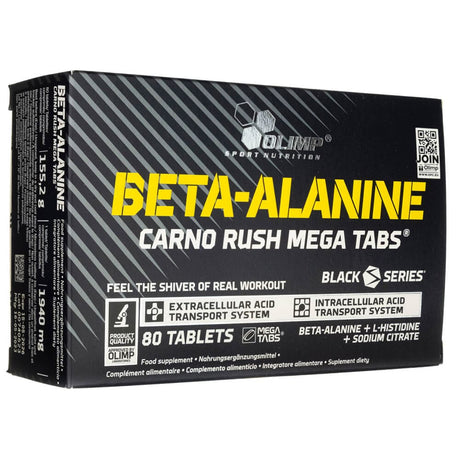
Olimp Beta-Alanin Carno Rush Mega Tabs - 80 Tabletten
Normaler Preis €10.49Grundpreis€0.13 pro Stück

Trec Nutrition
Trec Nutrition Beta-Alanine Sport 700 - 90 Kapseln
Normaler Preis €10.69Grundpreis€0.12 pro Stück


Synergistische Kombination: Kombination von Beta-Alanin mit anderen Nahrungsergänzungsmitteln
Beta-Alanin ist eine natürliche Ergänzung zu mehreren anderen gut erforschten Leistungspräparaten, die jeweils einen anderen limitierenden Faktor bei hochintensivem Training angehen:
Beta-Alanin + Kreatin ist die am besten untersuchte Kombination. Kreatin fördert die Regeneration von ATP bei maximalen Anstrengungen, während Beta-Alanin die Toleranz gegenüber der metabolischen Azidose verbessert, die bei anhaltendem hochintensivem Training entsteht. Sie wirken über unterschiedliche, sich nicht überschneidende Mechanismen, und es hat sich gezeigt, dass ihre kombinierte Anwendung zu additiven Leistungssteigerungen führt, die größer sind als bei jeder einzelnen Substanz allein. Unsere Kreatin-Kollektion deckt die wichtigsten wissenschaftlich belegten Formen ab:


BioTech USA
BioTech USA 100% Mikronisiertes Kreatinmonohydrat - 300 g
Normaler Preis €12.79Grundpreis€42.63 /kg


Vitaler's
Vitaler's Sport Mikronisiertes Kreatinmonohydrat 5000 mg - 500 g
Normaler Preis €11.59Grundpreis€23.18 /kg


Now Foods
Now Foods Kreatin-Monohydrat 750 mg - 120 pflanzliche Kapseln
Normaler Preis €14.89Grundpreis€0.12 pro Stück


Beta-Alanin + Citrullin-Malat ist eine besonders wirksame Kombination für eine anhaltende Trainingsleistung. Citrullinmalat erhöht den Arginin-Spiegel im Plasma, was die Stickstoffmonoxid-Produktion unterstützt, die Durchblutung der arbeitenden Muskeln verbessert, und – durch die Malat-Komponente – die aerobe Energieproduktion fördert. Citrullin reduziert zudem die Ammoniakansammlung, und wirkt damit auf einen anderen, aber komplementären Ermüdungsmechanismus als Beta-Alanin ein. Diese Kombination findet sich aus gutem Grund in vielen Pre-Workout-Formulierungen. Entdecken Sie unsere Pre-Workout-Kollektion für reine Citrullin- und Kombinationsprodukte.
Beta-Alanin + Koffein: Koffein wirkt zentral, um die wahrgenommene Anstrengung zu verringern und die Wachsamkeit zu verbessern, während Beta-Alanin peripher auf Muskelebene wirkt. Zusammen stellen sie eine der praktisch nützlichsten leistungssteigernden Kombinationen dar, die es gibt, da sie sowohl zentrale Ermüdung als auch periphere Muskelermüdung gleichzeitig bekämpfen.
Dieser Artikel dient nur der Information und ersetzt keine ärztliche Beratung. Bei gesundheitlichen Beschwerden, in der Schwangerschaft, Stillzeit oder bei Einnahme von Medikamenten wenden Sie sich an einen Arzt oder Apotheker. Nahrungsergänzungsmittel sind kein Ersatz für eine abwechslungsreiche Ernährung.


