

Knoblauch (Allium sativum) wird seit Jahrtausenden in nahezu allen großen Zivilisationen sowohl als Nahrungsmittel als auch als Heilmittel verwendet – vom alten Ägypten und Griechenland bis hin zur traditionellen chinesischen Medizin und der Ayurveda-Medizin. Sein pharmakologischer Ruf wurde in der modernen Wissenschaft bestätigt, als Forscher Allicin und verwandte Organoschwefelverbindungen als Quelle seiner charakteristischen Eigenschaften identifizierten. Toda y, Knoblauch-Extrakt-Präparate – insbesondere geruchlose Formen – ermöglichen es, von den dokumentierten Wirkungen des Knoblauchs zu profitieren, ohne die sozialen und kulinarischen Einschränkungen des täglichen Verzehrs von rohem Knoblauch in Kauf nehmen zu müssen. Dieser Artikel behandelt, was Knoblauch tatsächlich bewirkt, warum die geruchlose Form nützlich ist, und wann eine Nahrungsergänzung am sinnvollsten ist.
Was macht Knoblauch medizinisch wirksam?
Frischer Knoblauch enthält mehr als 2, 000 identifizierte Verbindungen, doch seine primären bioaktiven Bestandteile sind organische Schwefelverbindungen, die entstehen, wenn die Zehe zerdrückt oder geschnitten wird. Die wichtigsten sind:
- Allicin (Diallylthiosulfinat) – die Verbindung, die für den charakteristischen Geruch von Knoblauch verantwortlich ist; sie entsteht, wenn das Enzym Alliinase beim Zerkleinern auf Alliin einwirkt. Allicin ist UNS instabil und zerfällt schnell in andere bioaktive Verbindungen, darunter Ajoen und Diallyldisulfid.
- Ajoen — ein stabiles Abbauprodukt von Allicin mit nachgewiesener thrombozytenaggregationshemmender und antimikrobieller Wirkung
- Allylsulfide (Diallyldisulfid, Diallyltrisulfid) — die stabileren Organoschwefelverbindungen, die im Körper verbleiben und für viele der systemischen Wirkungen von Knoblauch verantwortlich sind
- S-Allylcystein (SAC) — der wichtigste bioaktive Wirkstoff in gereiftem schwarzem Knoblauch, wasserlöslich, hochstabil, und gutresorbierbar
Knoblauch enthält außerdem die Vitamine C, B1, B2, B6, und Niacin (, PP), sowie Mineralstoffe wie Selen, Mangan, Kalzium, Eisen, Kupfer, und Chrom. Es ist jedoch, der organische Schwefelanteil, der das größte Interesse der klinischen Forschung auf sich gezogen hat und die am besten dokumentierten gesundheitlichen Wirkungen von Knoblauch untermauert.
Geruchloser Knoblauch: Was er ist und warum er wichtig ist
Der stechende Geruch von Knoblauch – angenehm beim Kochen, weniger angenehm als anhaltender Körpergeruch – ist für viele Menschen ein Hindernis für eine konsequente tägliche Einnahme von Nahrungsergänzungsmitteln. Geruchsneutrale oder geruchsreduzierte Knoblauchpräparate lösen dieses Problem durch verschiedene Verarbeitungsmethoden: Einige verwenden gereiften Knoblauchextrakt (– durch die Reifung wird UNS Tabelle, das geruchsintensive Allicin in stabiles, geruchsneutrales S-Allyl-Verbindungen wie SAC),; andere verwenden eine magensaftresistente Beschichtung, um die Freisetzung von Allicin im Magen zu verhindern,; wieder andere nutzen dampfbehandelte oder stabilisierte Extrakte, die die Bioaktivität bewahren und gleichzeitig flüchtige Verbindungen minimieren.
Die entscheidende Frage bei jedem geruchsneutralen Knoblauchprodukt ist, ob es nennenswerte Mengen an bioaktiven Organoschwefelverbindungen enthält. Gut hergestellte geruchsreduzierte Produkte bewahren die meisten gesundheitsrelevanten Verbindungen – insbesondere die stabileren Allylsulfide und SAC – und reduzieren oder eliminieren gleichzeitig die für den Geruch verantwortlichen, von Allicin abgeleiteten flüchtigen Verbindungen. Für die meisten Anwendungen als Nahrungsergänzungsmittel, ist dieser Kompromiss völlig akzeptabel.
Wichtige gesundheitliche Vorteile mit wissenschaftlicher Untermauerung
Unterstützung des Immunsystems
Die antimikrobiellen Eigenschaften von Knoblauch gehören zu seinen am konsequentesten dokumentierten Wirkungen. Allicin und verwandte Verbindungen haben in Laborstudien eine Wirksamkeit gegen ein breites Spektrum an Bakterien, Viren, und Pilzen, gezeigt, darunter Staphylococcus, , Streptococcus, und Candida-Arten. Klinische Studien haben gezeigt, dass die Einnahme von Knoblauchpräparaten die Häufigkeit und Dauer von Erkältungen verringert und möglicherweise den Schweregrad von Infektionen der oberen Atemwege mindert. Auch wenn die Evidenz nicht so stark ist wie bei pharmazeutischen antiviralen Mitteln, hat die immunstärkende Rolle von Knoblauch eine dokumentierte Grundlage, die die Bezeichnung „natürliche antimikrobielle Unterstützung“ rechtfertigt – eine gängige und sinnvolle Einstufung in der europäischen Phytotherapie. Zur ergänzenden Unterstützung des Immunsystems, bietet unsere Immunsystem-Kollektion eine Reihe zusätzlicher Optionen.
Herz-Kreislauf-Gesundheit
Die Auswirkungen von Knoblauch auf kardiovaskuläre Parameter wurden umfassend untersucht. Klinische Belege stützen:
- Eine moderate Senkung des Blutdrucks — Mehrere Metaanalysen haben ergeben, dass eine Knoblauchergänzung bei Menschen mit erhöhten Werten zu einer geringen, aber statistisch signifikanten Senkung des systolischen und diastolischen Blutdrucks führt
- Cholesterinmodulation — Knoblauch kann das Gesamt- und LDL-Cholesterin moderat senken und gleichzeitig den HDL-Spiegel unterstützen; die Effektstärke ist gering, aber über alle Studien hinweg konsistent
- Thrombozytenaggregationshemmende Wirkung — Ajoen und Allylsulfide hemmen die Thrombozytenaggregation, und tragen so zu einer leichten blutverdünnenden Wirkung bei, die für die kardiovaskuläre Gesundheit relevant ist
- Homocysteinregulation — Einige Forschungsergebnisse stützen die Rolle von Knoblauch bei der Aufrechterhaltung normaler Homocysteinspiegel, einem Marker für kardiovaskuläre Risiken
. Diese Wirkungen sind real, aber moderat — eine Knoblauchergänzung unterstützt die kardiovaskuläre Gesundheit als Teil eines gesunden Lebensstils, nicht als Ersatz für die medizinische Behandlung von Bluthochdruck oder erhöhtem Cholesterinspiegel. Für eine umfassendere Unterstützung der Herzgesundheit, bietet unsere Kollektion an Herz-Kreislauf-Nahrungsergänzungsmitteln ergänzende Optionen.
Unterstützung für Verdauung und Leber
Knoblauch stimuliert die Magenschleimhaut und fördert die Produktion von Verdauungsenzymen, was eine gesunde Verdauung und Nährstoffaufnahme unterstützt. Seine antimikrobiellen Eigenschaften erstrecken sich auf den Magen-Darm-Trakt, wo er dazu beitragen kann, ein ausgewogenes mikrobielles Milieu aufrechtzuerhalten. Knoblauch unterstützt zudem die Leberfunktion – es wurde nachgewiesen, dass er die Fähigkeit der Leber zur Neutralisierung und Ausscheidung von Giftstoffen fördert, unter anderem durch die Induktion entgiftender Enzyme. Für zusätzliche Unterstützung der Verdauung bietet unsere Kollektion „Verdauungssystem“ () mit den Produkten relevante Optionen.
Antioxidative Eigenschaften
Organische Schwefelverbindungen und Selen im Knoblauch tragen zur antioxidativen Abwehr bei – insbesondere Selen ist ein Cofaktor für Glutathionperoxidase, eines der wichtigsten antioxidativen Enzyme des Körpers. S-Allylcystein (, das in gereiftem schwarzem Knoblauch) vorkommt, hat in Forschungsversuchen eine direkte Radikalfängeraktivität gezeigt.
Schwarzer Knoblauch: Eine besondere und konzentrierte Form
Schwarzer Knoblauch wird durch die Fermentierung von frischem Knoblauch bei kontrollierter Temperatur und Luftfeuchtigkeit über mehrere Wochen hergestellt. Dieser Prozess – technisch gesehen eher eine Maillard-Reaktion und enzymatische Umwandlung als eine Fermentation – wandelt die scharfen, stechenden Verbindungen des frischen Knoblauchs in eine Reihe stabiler, geruchloser Antioxidantien um, wobei S-Allylcystein in deutlich höheren Konzentrationen vorliegt als in normalem Knoblauch. Das Ergebnis ist ein Knoblauchprodukt ohne Geruch, mit einem süßen Umami-Geschmack und einem verbesserten Antioxidansprofil.
Fermentierter schwarzer Knoblauch hat aufgrund seiner Auswirkungen auf Blutfette, Blutzucker und die antioxidative Kapazität das Interesse der Forschung geweckt, wobei mehrere klinische Studien positive Ergebnisse berichten. Er ist eine überzeugende Option für Menschen, die die systemischen Vorteile von Knoblauch in einer schmackhaften und hochstabilen Form nutzen möchten.
Knoblauchpräparate bei Medpak
Wir führen Knoblauch in Öl-Softgels, Standardkapseln und fermentierten schwarzen Knoblauchextrakt von etablierten Marken:
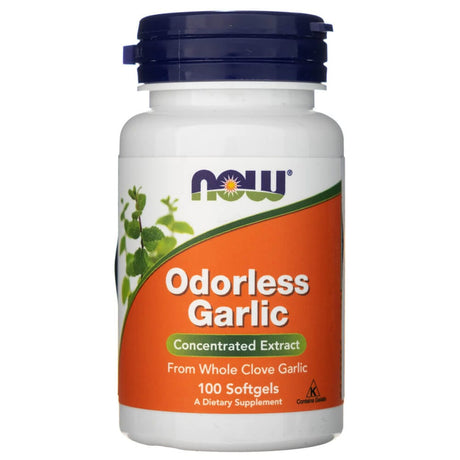


Now Foods
Now Foods Geruchsneutraler Knoblauch - 100 Weichkapseln
Normaler Preis €7.99Grundpreis€0.08 pro Stück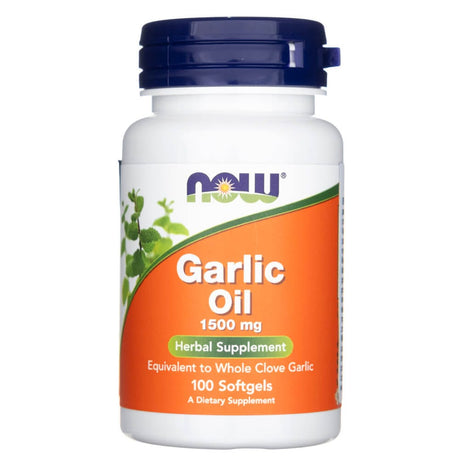


Now Foods
Now Foods Knoblauchöl 1500 mg - 100 Weichkapseln
Normaler Preis €5.89Grundpreis€0.06 pro Stück


 Um 5% reduziert
Medica Herbs
Medica Herbs Knoblauch 620 mg - 60 Kapseln
Verkaufspreis €5.39 Normaler Preis €5.69Grundpreis€0.09 pro Stück


Für alle, die sich für das verbesserte Antioxidansprofil von gereiftem schwarzem Knoblauch interessieren:
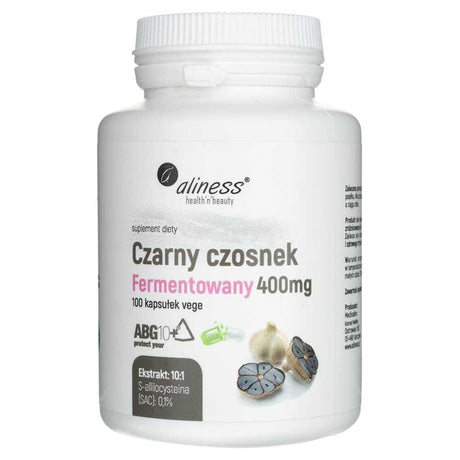


Aliness
Aliness Fermentierter schwarzer Knoblauch 400 mg - 100 Kapseln
Normaler Preis €15.69Grundpreis€0.16 pro Stück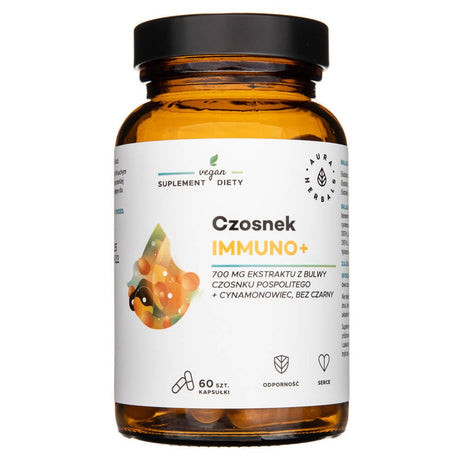


Aura Herbals
Aura Herbals Knoblauch Immuno+ - 60 Kapseln
Normaler Preis €6.89Grundpreis€0.11 pro Stück


Dosierung und praktische Hinweise
Die übliche Dosierung für Knoblauchextrakt liegt bei 1–2 Kapseln pro Tag zu den Mahlzeiten, wobei die spezifischen Anweisungen des Herstellers zu befolgen sind, da die Allicin- und Extraktkonzentrationen zwischen den Produkten erheblich variieren. Höhere Dosen erhöhen den Nutzen nicht proportional und steigern das Risiko von Verdauungsnebenwirkungen. Eine konsequente Einnahme über mehrere Wochen ist wichtiger als hohe Einzeldosen.
Frischer Knoblauch kann kulinarisch als Ergänzung verwendet werden – wenn man eine Zehe zerdrückt oder fein hackt und vor dem Kochen 10 Minuten ruhen lässt, kann sich Alliin in Allicin umwandeln, bevor das Enzym durch Hitze denaturiert wird, wodurch die Bildung bioaktiver Verbindungen maximiert wird.
Kontraindikationen und Sicherheit
Dieser Artikel dient nur der Information und ersetzt keine ärztliche Beratung. Bei gesundheitlichen Beschwerden, in der Schwangerschaft, Stillzeit oder bei Einnahme von Medikamenten wenden Sie sich an einen Arzt oder Apotheker. Nahrungsergänzungsmittel sind kein Ersatz für eine abwechslungsreiche Ernährung.


